Showing posts with label rape. Show all posts

Saturday, October 17, 2020

Welcome to Broken India, where indignity and injustice for the marginalised is the norm

Broken News

Published Oct 8, 2020

Link: https://www.newslaundry.com/2020/10/08/welcome-to-broken-india-where-indignity-and-injustice-for-the-marginalised-is-the-norm


Perhaps I should rename this column "Broken India". For that is what we have experienced in these last three weeks.

The Hathras Horror, as it has come to be called, will live with us for a long time. The alleged gangrape by four upper caste Thakur men of a 19-year-old Dalit woman in Uttar Pradesh’s Hathras on September 14, has all the elements that expose the sickness in Indian society.

First, the rape itself. It signifies that age-old dictum that when men wage war, it’s the women who are often the collateral. From what we have learned so far, the handful of Dalits in the victim’s village have long feared the dominant Thakurs and have been at the receiving end of threats and violence from them. To show the Dalits their place, rape their women – it is a ritual observed even in the India of 2020 with an average of 10 Dalit women raped every day across the country.

Second, we have witnessed how the criminal justice system continues to fail the most marginalised Indians. The family of the victim was forced to wait for several days, even though she was severely brutalised and close to death, before the police recorded her statement. How often have we heard this story? Not just in UP, this happens all over the country. And no change in law appears to make a whit of a difference. In fact, it appears as if all these laws are unknown to the police, or they selectively and deliberately choose to ignore them when the victim is poor or from a marginalised community.

Third, after the woman died in a Delhi hospital, the UP police transported her back to her village at night, didn’t allow her family to see their daughter one last time, and cremated her in the early hours of the morning without their consent. This surely will be remembered as one of the most horrific and patently illegal acts by a police force tasked to implement law, not break it.

And if all this was not enough, the police – who take their directions from the home minister, who happens to be the chief minister – barricaded the village, rushed hundreds of personnel to create a virtual fortress around this nondescript village, and stopped the media as well as opposition leaders from meeting the family.

When they lifted the siege, the story did not end. Top police officials claimed there was no evidence of rape as the forensic examination had not found any semen in the victim’s body. For the police, who ought to be cognizant of the law, including the changes in it, such a statement was extraordinary. A detailed report in Newslaundry explains the law and also what the family went through trying to get the police to act in accordance with it.

It is hard to believe that the police did not know that the victim's word that she was raped was enough in the eyes of the law. That they should speak of the absence of semen in the forensic report as casting doubt on rape was even more unbelievable. Any kind of penetration, even by an object, is defined as rape after the changes made in the law in 2013, in the wake of the 2012 gangrape of a 23-year-old woman in Delhi. So the absence of semen, that too after the woman has been in a hospital for over a week, has no relevance as Supreme Court advocate Vrinda Grover explains in a useful video on the Wire.

The victim's statements have now been appended in an affidavit filed by the UP police in the Supreme Court, where the matter has come up, as also in the Allahabad High Court, which took suo motu cognisance of the case after reports in the media of the late night cremation.

Apart from the police, the UP government, and the family of the victim, the other player in this story is the media. How did it conduct itself after September 30 and the late night cremation by the police?

Much has been written about the hustling and aggressive tactics of Indian TV journalists, particularly in the Sushant Singh Rajput case.

In Hathras, the determination of the India Today reporter Tanushree Pandey has been acknowledged as important because she succeeded in filming the illegal cremation of the victim's body. Her report is heartbreaking and deeply disturbing. But her persistence paid off as this evidence, apart from other reports, compelled the Allahabad High Court to take notice and demand an explanation from the UP police. Without it, the police might have succeeded in spinning its yarn that the cremation was done at the behest of the family.

Just as the victim's family struggled for days to get the UP police to proceed with the case, the media too was slow to wake up. The first reports appeared almost 10 days after the assault. It was only after her death on September 29, and the next day, when the UP police brought her back to her village late at night from the Safdarjung Hospital in Delhi, that the media became part of the story.

Once again, it is print and digital that have to be relied upon to place this kind of atrocity within context. Reports such as this and this in the Indian Express, for instance, give us a sense of the victim's family, the village, its caste make up and the history of trouble between the family of the men who are accused of raping her and her family.

This tragic quote from the mother in the first story speaks to the stark reality facing millions of Dalit families in this country: "She had to cross the highway just to get to the primary school. Trucks and buses moved at such speed…We pulled her out of school when she was in Class 5. We never let her go alone, we were afraid she might come under a car, or that someone might kidnap her…What we feared has come true. We couldn’t protect her.”

On that fateful day, the young woman had stepped out to help her mother collect fodder.

Much of the electronic media, unfortunately, went into its usual feeding frenzy once the barricades were lifted. As this video by Kavita, who is a reporter with the remarkable rural news portal Khabar Lahariya shows, reporters showed no sensitivity towards a grieving family as they thrust mics repeatedly in the faces of the mother, father and other relatives, trampled all over the house, sat wherever they could, did not even pause to consider that this family needed not just privacy but even just the space to conduct normal activities like cooking for the children.

One can’t only blame the reporters given they are all under immense pressure from their bosses to generate exclusives.

Yet, given that this behaviour has now become almost the norm for television reporters, is it time to retrain journalists on how to behave when approaching people who have suffered loss? Persistence might pay off in getting information, but surely insensitivity towards people who have already been beaten down cannot be justified.

The Hathras Horror is not just a crime against one woman. It is a reminder to us all, including in the media, of how little has changed for women in India. It’s also another reminder of the deep fault line of caste that persists in this country. And above all, it illustrates how the state and its law-enforcing arm, which is supposed to protect people, treat those without voice or political power. This is indeed a broken India.


Friday, December 13, 2019

How the demand for summary justice for rapists will backfire on India's poorest citizens

This comment piece by me appeared in The Telegraph, London on December 12, 2019

Link: https://www.telegraph.co.uk/news/2019/12/09/demand-summary-justice-rapists-will-backfire-indias-poorest/


The gruesome rape and murder of a 26-year-old woman, within the city limits of Hyderabad on November 27, has set off a furious debate in India on crimes against women. 

There are growing demands for summary justice, including public lynching of rapists, even though the death penalty was included in the rape law in 2012. Have people lost faith in the law and in the criminal justice system? Or does this represent growing lawlessness and demands for retribution and revenge that have come to dominate public discourse in India?

In 2012, when a 23-year-old woman was brutally raped by six men in New Delhi, there was nationwide outrage and demands for a change in the law. 

The law was changed in 2013. The death penalty was introduced. Policemen refusing to note rape complaints were to be held criminally liable. A special fund was created to set up one-stop crisis centres across India. And state governments were directed to fast-track rape trials so that they were not indefinitely delayed, as they tend to be.

Six years later, crime statistics show that the incidents of rape have not decreased. The conviction rate is an abysmal 27 per cent even of the cases reported. Police continue to ignore complaints by poor and marginalised women despite the law. And only 20 per cent of the funds for the one-stop crisis centres have been used. Also, many states have failed to set up fast-track courts for rape. 

Clearly, a stronger law alone makes little difference when the criminal justice system continues to fail women, from the first step of registering a complaint to the trial that stretches for years. Many women simply give up. Many more, stay quiet. 

This apart, what is more worrying for the future of women in India, and for India itself, is what followed the Hyderabad rape. 

Within days, the police had rounded up four suspects and claimed they had confessed. Their names were made public. One happened to be a Muslim. This led to demands for summary justice on social media, dominated as it is by Islamophobia. 

Then a woman member of parliament demanded that rapists should be lynched in public. Another suggested chemical castration.  Instead of disgust, such demands were applauded. 

The calls for lawlessness by our lawmakers were heeded, it would appear, by our law enforcers. In the early hours of December 6, the four suspects, who incidentally could find no one to represent them in court, were taken out to the scene of the crime and shot dead. 

The police claim the men tried to escape and snatched their weapons. They had to fire in retaliation, they say. Yet there is no evidence yet of anyone from the police contingent being injured. The four suspects are dead. And the case is closed. 

As worrying as is this extra-judicial killing, of men against whom even a charge sheet had not been prepared, has been the response of the public and politicians. Almost across the board, there has been praise of the actions of the Hyderabad police. People showered flowers on the policemen. And there are demands for similar action, known locally as ‘encounters’ against other rapists. 

In fact within days of the Hyderabad incident, a young woman was set on fire by men she had accused of rape in a village in the northern statue of Uttar Pradesh. She died a few days later. Now her parents are demanding that the accused be ‘encountered’. 

It is this deadly mix of demands for public lynchings, and for the police to simply eliminate suspects of crime, that should worry us. India still calls itself a constitutional democracy. But when law-makers endorse lawlessness and law enforcers implement this, you are looking at the beginning of a serious breakdown in civilisational norms. 

Since 2015, we have witnessed public lynchings of poor Muslim men, in the name of protecting the cow, held sacred by Hindus. The ruling  Bharatiya Janata Party has deliberately turned a blind eye to this. 

Today, in the name of protecting Indian women, summary justice is being demanded. The men who will receive this will only be the poor, the marginalised, those unable to mount a defence. While the rich, the powerful, including so-called godmen, remain untouched. 

Indian women will only feel safe if we fix the criminal justice system, deal with the rape culture being reinforced by mass media and end embedded patriarchy that still views women as property. 

Why does India’s media cover some rapes extensively and ignore others?

 This is a new fortnightly column that will now appear on the website newslaundry.com.


BROKEN NEWS
 
Published December 4, 2019

Link: https://www.newslaundry.com/2019/12/04/indian-media-rape-coverage-journalism

Does the media contribute directly, or indirectly, to distorting our
understanding of the reasons for the increasing violence against women?

I ask this question against the background of the horrific rape and
murder of a 26-year-old veterinarian in Hyderabad on the evening of
November 27. Her charred remains were found the next day after her
parents managed, after several failed attempts, to get the police to file a
missing person report.

All media ran with the story – print, TV, digital. It had all the elements
of horror. It happened not in a desolate, distant area but near a toll
booth in a metropolitan city. And it reminded us of the everydayness of
violence: a working woman, waiting to go home, could be abducted,
raped and murdered within shouting distance of a toll booth.

There was outrage, as expected. Demonstrations, young women holding
placards that asked “Am I next?” These were mostly in Hyderabad, with
a few protests in other cities.

The public demonstration of anger and the media coverage was enough
to push the state government to act. Within days, the police
apprehended four young men who apparently confessed to the crime.
The government promised to “fast-track” the case. And the policemen
who had delayed noting the complaint by her parents were suspended.

At the same time, there was a show of competitive concern, especially
amongst politicians. As “Hang the Rapists” was a slogan that was past its
expiry date, as the death penalty for rape was already in the statute after
the 2012 gang rape of a 23-year-old woman in Delhi, what else could
they demand to be noticed above the anger on the street?

Samajwadi Party MP Jaya Bachchan won that competition hands down
when she declared in Parliament (the place where laws are made) that
rapists should be lynched in public. In other words, the public should
take the law into its own hands. This in a country where public lynchings
of defenceless Muslim men have been conducted in the name of
protecting cows, with the full knowledge that there will be little or no
punishment for the crime.

Given the recent history of lynchings in India, Bachchan’s remarks are
even more ominous. In the Hyderabad case, the names of the four
accused were leaked even before the police held a press conference. One
of the accused is Muslim. That was enough for the Hindutva army on
social media, as AltNews reported, to dive straight into a communal war
of their own creation, painting dire scenarios of what could happen in
the future. As the article rightly points out, “A disturbing phenomenon is
observed in recent times where crimes as heinous as rape are
communalised. The trend is not only true in the case of social media but
for also prominent individuals in the government and media outlets
capable of shaping public opinion. Since the brutal incident was
reported, the police had identified all the four accused. But a social
media campaign attempted to paint a communal picture. Irresponsible
media reports, with clickbaity headlines, furthered the misleading
narrative instead of dousing the hate.”

The question for the media, given the growing atmosphere of hate,
compounded now by politicians suggesting rapists should be lynched, is
whether the photographs of the accused should be printed.

These are men against whom the police claim they have a case. But a
chargesheet has not been filed. Do they not have the right to a fair trial?
How many men have been accused and imprisoned for years on terror
charges, for instance, before being acquitted by the courts? Given our
dysfunctional criminal justice system, is it not incumbent on the media
to err on the side of caution, rather than encourage, and even join, the
lynch mobs? Is it not the duty of the media to aid justice rather than
perpetuate injustice? These are questions we must ask.

There are other questions. The name and identity of the woman were
used in practically all media in the immediate aftermath of the crime.
This happened despite a 2018 Supreme Court ruling, in the context of
the rape and murder of an 8-year-old girl in Kathua, Jammu, that the
media cannot name a rape victim even if she dies. Yet, the same mistake
was repeated. By the time some media houses realised their mistake, her
name and photograph were all over social media and even today come
up when you do an internet search.

Linked to this is the norm that any respectable media house ought to
follow: that even reporting on the locality where the victim lives, or
giving away the identity of her parents and family, is equivalent to
revealing her identity. Yet, this too continues to be violated. Not
surprisingly, the residents of the colony in Hyderabad where the
woman’s parents live locked the gates and put up a notice that read, “No
Media, No Police, No Outsiders - No sympathy, only action, justice”.

Finally, there is the question of the selective amplification of crimes
against women. How does the media choose which ones to report on
extensively? Convenience, proximity, scale of the crime are some criteria.
But also class, caste, locale – biases that are so routine they go
unnoticed.

A few days before the rape in Hyderabad, a Dalit woman who sold
utensils and balloons was raped and murdered in a village in Telangana,
129 km from Adilabad. The Deccan Chronicle carried a story about her
husband complaining that the state government did not respond,
perhaps because they were poor and Dalit, nor did the civil society. Nor
did the media, I might add.

The lack of interest in the media about crimes away from regular beats
and metropolitan areas has a direct impact on our understanding of the
extent of violence against women, especially poor and marginalised
women, and the reasons for it. In fact, in the week before and after the
Hyderabad rape, several such horrific incidents were reported from
different parts of the country. But only one was pursued by the media.

Such selective reporting reinforces the belief that public spaces are
unsafe for women. Instead of our society questioning why any woman
should be afraid to step out, women are asked to take precautions.

In fact, within days of the Hyderabad rape, the city’s police
commissioner came out with 14 recommendations on what women
should do to be safe. Many women were outraged by his advisory.

One of them wrote on Twitter, "We are raped by men so for heaven’s
sake issue a damn advisory for men to NOT RAPE us. Why the hell are
we paying the penalty for men who are monsters? This is the problem,
tell your men to NOT RAPE WOMEN! Keep your
damn safety advisory to yourself.”

The other side of selective focus on some crimes against women is that
people forget that over 90 per cent of sexual assaults on women take
place in their homes, in their neighbourhoods, by men known to them.
By constantly reporting only on crimes in public spaces, this reality gets
obscured.

Although one could argue that the media cannot report every crime
committed against every woman, it is evident that reporting crimes
against women is a selling proposition. The media thrives on crime,
controversy and crises. The media can generate the latter two when they
are in short supply. But as there is no shortage of crime, the media sets out
to pick and choose the crime stories that sell.

In doing so, despite the debates, the judicial rulings, the protests from
the afflicted, the media continues to fail women victims of crime and to
create false narratives on an issue like violence against women.

Tuesday, August 06, 2019

Delhi 2012 vs Unnao 2019


Originally published in Mumbai Mirror on August 3, 2019


In his column on the Unnao rape case (Mumbai Mirror, August 2, 2019), Dushyant asks, "Why was there so much anger on the streets once upon a time and why is there so little now?" He was referring to the small turnout at India Gate in Delhi on July 29, at a demonstration to express solidarity with the 19-year-old rape survivor, now fighting for her life after a headlong collision in a suspicious road accident.

The public anger over the gang rape of a 23-year-old woman in Delhi on December 16, 2012 (I have consciously chosen not to refer to her by the fictitious name given by the media), has become something of a golden standard for spontaneous civil society response to an unspeakable crime.

Yet, not all rapes or crimes against women bring forth such a response. Why? This question has been asked before, repeatedly. Women who are poor, Dalit and Adivasi, from Kashmir and the Northeast have often asked why when they are raped, there are no candlelight vigils and protests? Why is one rape more important than another?

There are many different reasons behind the politics of rape. But if we look at the difference between the response in 2012 and today, the reasons include the nature of the crime, the site of the crime, and the dominant politics of the day.

First, in 2012 there was space for protest -- both spatially and psychologically. People were not afraid to occupy the streets and register their anger. The government then was a loose coalition, with many gaping holes that made it approachable, as also vulnerable.

Today, after two general election victories, the Bharatiya Janata Party under Narendra Modi has a brute majority in Parliament, holds power in the majority of states, and has already shown why it need not pay heed to any opposition, political or otherwise. The government and the ruling party project themselves as coterminous with "the nation".  Hence, any questioning or opposition to the former is automatically "anti-national".

Secondly, the 2012 incident took place in the national capital -- the location of political and media power.  Protests there drew the attention of both.

In 2019, the crime occurred in a small town in UP, away from the media spotlight and the centre of political power. While media paid sporadic attention, the BJP-led state government ignored it.

Thirdly, the men charged with the crime and eventually convicted in 2012, were powerless, part of the urban poor, the 'other', people who could be pilloried, blamed, named without any fear of repercussions.

In 2019, the man charged with the crime, Kuldeep Singh Sengar, belongs to the ruling BJP, is an MLA with enormous economic clout. When the predators are powerless, all of us, including the media, can be angry and raise our voices.  When they are the powerful, our response is feeble, if at all.

The voice of the Unnao survivor has only been heard because she took a tremendous risk and threatened to immolate herself before UP Chief Minister Yogi Adityanath's office.  But even that didn't work. Today, despite innumerable petitions and pleas by her to everyone, including to the Chief Justice of India, it is only when she is near death that we have woken up.

What can we learn from these differing responses to crimes against women?

When a crime is performed in public, so to speak -- in a moving bus in Delhi, for instance -- we are shocked and horrified.  When it occurs in the quiet interstices of a home, an office, by men who are supposed to be "protectors", or friends, or relatives, or neighbours, or representatives of the law, we do not hear or heed the cries for help. As also of those women who are invisibled, by virtue of their caste, class or geographical location.

Yet, what happened to the 19-year-old from Unnao represents more than 90 per cent of the crimes against Indian women, perpetrated by men known to them or who wield power over them.  This is what we should be raging about, because this woman from Unnao represents nine out of every ten women in India.


Thursday, February 21, 2019

Here’s proof that the print media in India is alive and kicking

My column in Scroll.in

The print media in India is alive and kicking. If there were any doubts about this, the last few weeks have dispelled them.

Two of the biggest exposés this season have come from print. One from Somesh Jha of Business Standard, published on January 31, on the jobs data in the National Statistical Commission’s employment survey 2017-’18 that the government has been desperately trying to hide because it reveals the extent of unemployment, the highest in 45 years.

And the other, a story that is still unraveling every day, is the series by N Ram in The Hindu about the controversial Rafale deal between France and India. Both Jha and Ram have produced documentary evidence that has put government spokespersons on the spot while trying to explain their side of the story.

The two stories are a reminder of how journalism needs to be done, slowly and painstakingly until what is put out to the public is convincing.

While no one yet has faulted the facts in these stories, sometimes complex stories like the Rafale imbroglio pose a challenge to the lay reader. For instance, the first story in The Hindu on the pricing issue was dense and contained information that the uninformed reader would have struggled to follow. Did India under the current government pay more for each of the 36 fighter jets than it would have for the earlier deal of 126 jets negotiated by the previous government? Now, according to the report tabled in Parliament by the Comptroller and Auditor General, it did not. But the documents emerging in the public realm suggest that this is not yet a settled fact.

However, the two stories that followed this one were clearer and unravelled several important aspects of the deal, such as a set of parallel negotiations being conducted by the Prime Minister’s Office without the official negotiating team from the Ministry of Defence being informed, and changes in certain clauses that allowed the seller to get away without giving a sovereign guarantee. The latter has been confirmed by the Comptroller and Auditor General.

Jha’s stories on the jobs data could not have been clearer and the reader would be left in no doubt about why in election season, a government would not want such facts to be in the public domain.

Calling out the bluff of the government is the job of the media in a democracy. That is the importance of these two exposes.

It is also the job of the media to fact check and point out the misinformation, and sometimes lies, put out by the people in power. When politicians, like the prime minister, receive widespread coverage for all their public events, what they say at these occasions is out there without any questions being asked about the veracity of the statements being made.


Death sentences in India


One such statement was made by Prime Minister Narendra Modi at a meeting in Surat at the end of January where, according to ANI, he said: “There used to be rapes in this country earlier too, it is a shame that we still hear about such cases. Now, culprits are hanged within 3 days, 7 days, 11 days and a month. Steps are being taken continuously to get daughters justice and results are evident.”

This statement, posted on Twitter by ANI, brought forth a number of adverse comments, calling out the inaccuracy of Modi’s statement. Even Scroll.in carried an article on this.
However, another fact check by Mumbai Mirror pointed out that in the translation of Modi’s speech, ANI had erred. Where the PM had spoken of the death sentence, the agency had used the word “hanged”.

The paper also pointed out that indeed, there had been judgments in lower courts awarding the death penalty to rapists within a short period. The cases quoted are all from Madhya Pradesh: one was awarded in July within 22 days, another in the same month within 46 days and one in August within three days. There have been no hangings in India for rape since 2004, when Dhananjoy Chatterjee was executed for the rape and murder of a 14-year-old girl.

What is worrying about the prime minister’s statement is not that it was not factual, but that it was, at least partially, true. If judges are handing out death sentences so rapidly, should we not be worried? Not only those of us who are principally against capital punishment. But because such hasty decisions are precisely the reason there was opposition to the introduction of the death penalty for rape by the Justice Verma Committee in its 2013 report. It had argued then that “in the larger interests of society, and having regard to the current thinking in favour of abolition of the death penalty, and also to avoid the argument of any sentencing arbitrariness, we are not inclined to recommend the death penalty”.

In any case, official data from the National Crime Records Bureau (only available until 2016) illustrates that the introduction of capital punishment for rape has made no difference to the crime rate.

Second, also of concern is the prime minister taking credit for these rulings. “Steps are being taken continuously to get daughters justice and results are evident,” he said. What steps are these that his government is taking that are resulting in such rulings? Are public prosecutors being incentivised to push through rape cases? Are lower court judges being nudged into delivering quick rulings?

The law was amended in 2013, and the death penalty was introduced for the “rarest of rare” cases, before his party came to power. One would really like to know what the prime minister meant. But no one has asked him. And in any case, he is not available for pesky questions from the press.


India’s sex ratio


Take another similar claim that the prime minister made about the sex ratio improving under his watch.

On more than one occasion, Modi has lauded his government’s Beti Bachao Beti Padhao programme, crediting it with having improved the sex ratio and female literacy levels in Haryana, Rajasthan and several other states. While that might be true in the case of specific districts in these states, the reality is somewhat different as an editorial in The Telegraph points out. Indeed, even if there is an improvement in some states, in the southern states with better female literacy rates, there has been a perceptible decline in the sex ratio.

Another report in The Telegraph illustrates this by giving data from Bihar where in a district like Vaishali, although the female literacy rate has improved from 50.49% in 2001 to 68.57% in 2011, the sex ratio has declined from 937 girls per 1,000 boys in 2001 to 894 in 2011.

And overall, the sex ratio at birth in India has declined from 887 in 2014 to 877 in 2016.
This is something not just the government, but Indian society as a whole needs to worry about. Clearly, governments cannot pat themselves on the back if female literacy rates increase and assume that this will inevitably result in an improvement in the sex ratio. The roots of son preference, and therefore sex selection, are embedded in a patriarchal culture that appears not to be dented either by government literacy programmes, or by stringent laws.

(Click on the link above to read the original)

Thursday, June 09, 2016

Yes, it's time for a re-think – by people trying to deflect charges of sex crimes by their friends

Scroll.in  June 9, 2016

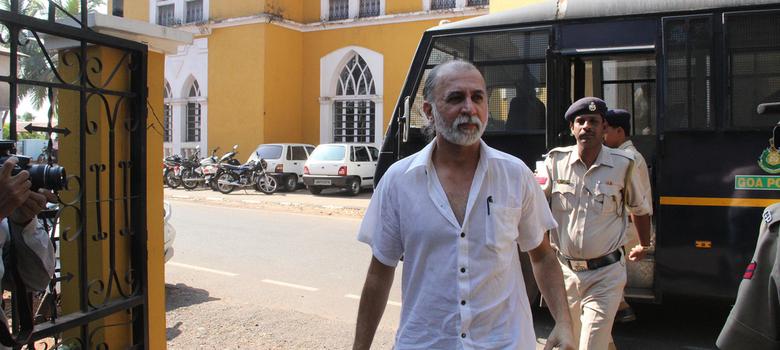
An item in a Mumbai tabloid on Thursday said that journalist Tarun Tejpal, who is facing rape charges, had merely committed a 'grave error'.

Normally, the dozens of ill-informed and vacuous comments that find space in the “diary” sections of some newspapers are best ignored. Yet sometimes a response is needed.

I am referring to an absurd diary item in the Mumbai tabloid Mid-Day on June 9. As I said, it could be ignored as the newspaper is published only in one city, Mumbai, and has a limited circulation. Yet, in these days of Internet and social media, the reach of such publications is amplified.

So Malavika Sanghvi, in her column “Malavika’s Mumbai: The Daily Dish” (last item) that appears on page 8 of Mid-Day has taken up the case of Tarun Tejpal, former editor of Tehelka, who was charged with rape by a colleague, is currently facing trial in a court in Goa and is out on bail.

Under the headline, “Time for a RE-THINK?” Sanghvi refers to the serious rape charge against Tejpal as “a grave error”. And because this so-called error apparently gave “his detractors ammunition to demolish him” through an “excessive” and “relentless media campaign”, she suggests that it is time for “strong liberal voices” to speak out.

(To read the rest, click here.)

Sunday, December 06, 2015

Is violence the new normal?

The Hindu, Sunday Magazine, December 6, 2015


The report by Women Against Sexual Violence and State Repression that recently sent a team to investigate the impact of the conflict on women, speaks of the violence, rape and sexual assault that the local women live with every day. Photo: Lingaraj Panda
The Hindu
 
Has violence against women become so commonplace in India that we have stopped noting it? Do we need anniversaries — December 16 is coming up — to remind us of something that happens every day? Every year, the United Nations designates 16 days for activism against gender-based violence. So from November 25 to December 10, Human Rights Day, a slew of statements and events focuses on this. Useful as that is, we have to ask why we need specific days to express our concern for something that ought to be part of our daily discourse.

Gender violence does not occur occasionally. It happens everyday, everywhere. Yet, we only take note when something out of the ordinary happens, something horrific like the December 16, 2012, gang rape in Delhi. The sheer brutality of that rape and murder is seared into our collective memories. It galvanised people, who had never before been out on the streets, to shout that enough is enough and this culture of violence must end. 

That was three years ago. Today, that culture of violence remains embedded, throwing up new shoots every day. What is frightening is the ordinariness and the pervasiveness of sexual violence: the acceptance that it is there and will always be there; that women will get beaten up; that girls will be sexually assaulted. It is this ordinariness that makes us immune, almost indifferent to the daily litany of sexual assaults against women. 
 
Look at any newspaper. The stories leap out at youevery day, any day: “Nine-year-old sexually assaulted by her teachers”; “21-year-old jobless youth held for sexual assault of two-year-old.” What we read about is but a sliver of the whole. Because the whole of it takes place behind closed doors, in hidden places where there are no eyes to note, no cameras to record. It includes crimes that we don’t read about, because no one goes there to witness them, to listen to the victims, to understand that violence against women is the new normal in some parts of our country.

One such place is Chhattisgarh. With deadly regularity, there are reports of encounter deaths. What is not reported is what precedes or follows these encounters. Some of these stories have been reported in local newspapers but barely a word has appeared in the national media. As usual, a curtain of invisibility falls on incidents that occur in places that the media cannot access or does not try to access.

A few brave local journalists have tried to report on some of these stories that would otherwise be forgotten. And they have paid a heavy price for this. Two of them, Santosh Yadav and Somaru Nag, are still in jail in Chhattisgarh after being picked up in September and July respectively on suspicion of being sympathetic to the ‘Naxals’.

Apart from “encounter” killings, women in these troubled districts of Chhattisgarh have been targeted. Their stories remain largely unreported and uninvestigated. The report by Women Against Sexual Violence and State Repression that recently sent a team to investigate the impact of the conflict on women, speaks of the violence, rape and sexual assault that the local women live with every day. Their report, about incidents during October 2015, is based on testimonies by dozens of women.

One such story was that of a 14-year-old girl from Peddagulur village in Bijapur district. According to the report, the girl “was grazing cattle with other women when she was chased by security forces. Overpowered and blind-folded, she was raped by at least three people before she became unconscious.” Another tragic story is that of a four-month pregnant woman who was stripped by the security forces, “repeatedly dunked in the stream, and then gang-raped.” Other women spoke of being chased, beaten, their houses looted and their property destroyed.

Despite this report, the higher ups in the police dismiss the complaints as propaganda. When you divide a population into ‘us’ and ‘them’, and the latter are seen as ‘terrorists’, then anything can be denied. Crimes against humanity become propaganda. And by refusing to even acknowledge that these crimes have occurred, the state seeks to erase them from history.

In this case, there are two small factors that give some hope. One, that the women’s group and the local media were able to reach these villages and record the testimonies of the women. And two, that some of these women could travel to the district headquarters and depose before a district collector who was willing to listen and a police officer who was open to filing an FIR.

It is still a long haul from this stage to one where the men involved will be caught and punished. But given that practically no case of this kind has made it even to the FIR stage, it is worth noting. To come back to special days, and activism against gender violence, this is needed, every day, and against all forms of violence. Not just the sexual assaults in our cities, or those that the media choose to highlight.

Sunday, June 07, 2015

When women seek help...

The Hindu, Sunday Magazine, June 7, 2015


Why do governments feel compelled to ‘celebrate’ one year in office and use the occasion to boast of their ‘achievements’? Yet, when criticised, they protest that one year is too short a time to pass judgment. If that is true, then why bother to mark one year?

Since May 26, when the Modi government completed a year in office, we have been subjected to a familiar litany of ‘success’ stories by the government’s acolytes and the predictable trashing of its claims by the opposition. Obscured by the screaming matches, particularly on television, is the real story of how difficult it is to be successful in many of the areas that the government wants us to believe that it has done something.

Take the promise of making women more secure and safe in this country. All political parties had to pay heed to the demand for changes in the law that arose following the December 2012 Delhi gang rape. And every party supported the amended rape law that incorporated some of the suggestions of the excellent Justice Verma Committee report. One concrete outcome was the creation of a Rs.1,000 crores Nirbhaya Fund by the previous government.

Not be left behind, the Modi government allocated another Rs.1,000 crores to the Nirbhaya Fund. But the last allocation has still not been utilised. So, merely adding more money to a fund that is not being used will not make much difference for women.

What will make a difference is if some political heft and will is put behind the concept that led to the creation of this fund.  One concrete plan was to use it for one-stop crisis centres, to be called Nirbhaya centres. These institutions, which could be either standalone or part of an existing health facility, would provide a rape survivor with the kind of help she needs when she decides to report the crime. Instead of running from one institution to another — the police, a hospital, a lawyer etc. — she could go to one centre that would provide multiple services: medical, psychological, police, legal and forensic.  Such centres exist in many countries and have proved hugely beneficial.

In the absence of such places, imagine what happens when a woman reports a rape. First she narrates her story to the police. Then she goes to a hospital, where she is taken to the casualty section. Often she has to wait. The doctor in-charge is usually a man. She has to go over all the details again. There is no rule that a woman doctor or nurse should be present. Eventually, she sees a gynaecologist who has to collect samples that could be crucial evidence. Ideally, she should also have the services of a counselor, although in India this is rare. In addition she needs sound legal advice on how to proceed further.
All this constitutes just the first step in the long fight for justice. If rape cases fail — the rate of conviction for rape cases in 2013 stood at a paltry 27 per cent — it is precisely because all these facilities are not in place when the woman seeks help. And, even if forensic evidence is collected in a hospital, it is often not stored properly. As a result, it fails to be useful when called upon during a case. So, clearly, such one-stop centres are essential.

Yet, as we are discussing this government’s first year in office, what is its record? When it came to power last year, it promised 660 Nirbhaya centres. Despite additional allocations, the number has been whittled down to just 36 centres.  What sense does this make? Is the government doing this in phases? Is there a long-term strategy? How will it decide where to locate these few centres? No such details are available making one suspect that this is another of those plans where action does not match the rhetoric.

To make the amended law work, the government has to put in place structures that will aid those seeking justice. A stronger law will not result in a conviction if the prosecution does not make an effort to pursue the case, if the survivor does not get proper legal advice on how to proceed, if the medical and forensic evidence is not properly collected and stored, if witnesses are not protected so that they don’t change their stance at the last minute and most importantly, if the woman’s right to privacy is not respected. There are gaping holes at every step that clever defence lawyers exploit. The result is humiliation and defeat for a woman already traumatised. Every such case that is dismissed deters other women from pursuing the legal option.

The real test of intent lies in the details — not the broad-sweep catch phrases so loved by politicians, including the Prime Minister. The ‘acche din’ for Indian women are a long way off; the ‘burre din’ continue.

Sunday, March 15, 2015

Suzette Jordan showed that India isn't ready for rape survivors who deny their victimhood

Published in Scroll.in on March 14, 2015


A 40-year-old woman died of meningo-encephalitis in a Kolkata hospital on March 13.  We need never have known her name.  Yet Suzette Jordan is a name we do know.  She is also “India’s daughter” and her story is exceptional.

A little over three years ago, on February 5, 2012, Jordan went to a nightclub with friends on Kolkata’s famous Park Street.  A man she met there offered her a lift home.  Instead of dropping her to her destination, Jordan was gang-raped and then flung out of the car.

She picked herself up and reported the rape.  Because it happened in the heart of Kolkata, the crime attracted enormous media attention. Jordan became known as the “Park Street rape victim”.  But few applauded her courage at complaining to the authorities about the crime. Chief Minister Mamata Banerjee said Jordan had fabricated the case.  Others suggested that she was a prostitute.  What was she doing out at a nightclub when she was the mother of two girls, people asked.  For months, Jordan suffered in silence, fought her case through a hostile court, with little sympathy from even the judge.

Going public

A year later, Jordan decided to come out in the open.  “Why should I hide my identity when it was not even my fault?” she told NDTV.  “Why should I be ashamed of something I did not give rise to?  I was subjected to torture, and I was subjected to rape, and I am fighting and I will fight.”

She fought.  But there was little sympathy from society. Her daughters, who she brought up as a single mother, were mocked at school.  No one would give her a job, despite interventions from the few who were sympathetic.  She finally got one with an NGO on a helpline for women in distress.

Jordan was not an exception in that she was raped.  In the last two weeks, the brutal rape and subsequent death of a young woman in Delhi has foregrounded the intense discussion about whether the telecast of Leslee Udwin’s film on that rape, India’s Daughter, should be allowed in this country.

Exposing hypocrisy

But Jordan stood out because she decided to reveal her identity.  By openly declaring that she was the “Park Street rape victim”, Jordan exposed the hypocrisy of Indian society, its fake sympathies for women victims of sexual assault that disappear if the woman stands up and flings off the shroud of shame society expects her to wear for the rest of her life.

Jordan’s experience illustrates how the blame for rape continues to cling to the survivor if she chooses to deny victimhood.  Who knows what the December 16 victim, whose name we still do not take, would have suffered had she lived.  Because we now celebrate her life, have given her a fictitious name, we can fool ourselves into believing that we respect and honour women like her. But do we?

While India’s Daughter brought home the unrepentant attitude of the convict, Mukesh Singh, and the crass and misogynistic views of the defence lawyers, it did not reveal what survivors of rape face if they dare to fight their cases.

Humiliating court procedures

Speaking of her experience in court to a friend, Jordan mentioned how she was humiliated, made to repeat what she suffered and felt as if she had been gang-raped repeatedly in court.  Lawyer Flavia Agnes has written about how a Mumbai journalist who was gang-raped in August 2013 had to walk up and tap the accused on the shoulder in the police line-up and state loudly what he did to her.  The woman raped in December by a taxi driver in Delhi, what is known as the Uber rape case, has had to turn to the Supreme Court to appeal against repeated questioning by the defence.

Yes, the law has changed, but not the conduct of the police, lawyers, or the atmosphere in our courts where rape cases are heard.  This is what Jordan’s story tells us.

In her death perhaps she will get the respect that was denied to her when she was alive.  Respect for shedding anonymity, respect for refusing to be pitied, respect for insisting that the shame was with the rapists and not with the woman assaulted.

Unfortunately, given what Jordan went through in the two years since she came out in public, her story is unlikely to encourage others to follow her example.  We were not ready for Suzette Jordan; we still aren’t.
 
Link:http://scroll.in/article/713561/Suzette-Jordan-showed-that-India-isn%27t-ready-for-rape-survivors-who-deny-their-victimhood

Crucial realities

The Hindu, Sunday Magazine, March 15, 2015

This March 8 was not a very happy occasion. Despite the celebrations, lurking at the back was not just the unseemly controversy over the banning of the film India’s Daughter about the December 2012 Delhi gang rape and murder but also the public lynching of a man accused of rape in Dimapur, Nagaland. There is no connection between the two. Yet, the operative word was ‘rape’. It hung in the air even as we told ourselves that the day was all about women’s empowerment.

Although the film, watched extensively on the Internet despite the ban, produced mixed responses, the chilling image that lingered was that of the convict Mukesh Singh’s cold and unrepentant words as he spoke explicitly of what happened on the bus that dreadful night of December 16. It produced in all of us a mixture of revulsion and helplessness, the former to hear a man responsible for the death of an innocent speak so clinically and casually about it, and the latter because you knew that this was not an aberrant, a monster, speaking but that he could be Mr. Everyman or as someone pointed out, he was another of ‘India’s sons’.

And while we discussed and debated, and for a brief while turned our attention to that much neglected part of India, the Northeast, because of the ghastly lynching of Syed Sarif Uddin Khan in Dimapur, more young girls and women were molested, assaulted, raped. These statistics don't take a break for any special day for women.

The Dimapur killing was a reflection of the growing clamour for instant justice echoed by people elected to uphold the law.  On March 8, Bharatiya Janata Party MLA from Madhya Pradesh, Usha Thakur said in response to the Dimapur lynching, “There is a need to make a stern law against men who rape minor girls. Such criminals should be hanged in full public view and their last rites should not be performed.” A recipe to make India safer for women? Surely not.

At a time when what happens today dominates and yesterday’s news is forgotten and buried, we also forgot that thousands of women had occupied the streets of Delhi just days before March 8. The march by farmers from 16 states to Delhi on February 23, to register their protest against amendments to the Land Acquisition Act, included hundreds of women. You can see them in the photographs, women of all ages, wearing colourful saris, determination writ clearly on their faces. They sat with the men and made the same demands. They were there as farmers, and as women.

Who were these women? Why had they travelled this long distance to Delhi? Why was land so important to them? Did any of us speak to them and ask? Apart from one TV channel that had two women farmers give their views on the budget — a blink and miss intervention — the voices of such women were never heard. And before we could find out what they were thinking, they had packed up and gone back. We had missed the crucial reality that farmers are not just men but also women, that agricultural losses and the takeover of farming lands hits women as much as men and that this gender dimension of the law needs to be heeded.

It needs to be heard not just because women constitute 48.5 per cent of the Indian population and therefore cannot be treated as invisible. But also because recent studies suggest that there is a link between women’s economic rights, their right to own land and business, and their ability to face physical and other forms of violence.

Govind Kelkar, Shantanu Gaikwad and Somdatta Mandal have recently published one such study titled ‘Women’s Asset Ownership and Reduction in Gender-based Violence’. The study is based on data from Karnataka and Telangana, both states with patriarchal structures in land ownership and Meghalaya, which has a matrilineal system.

Space does not permit a detailed analysis of the facts in this study. It makes the basic and important point that when women have control over land and income, they have greater control of their lives. Ownership of assets does not automatically add up to a reduction in violence as there are many other factors making women vulnerable, particularly in the home. Yet, this study and the women interviewed in the three states suggest that ownership of land gives women greater self-respect in the family and the courage to speak up.

Such studies are important. We talk about violence against women (and not just rape). There are no instant or easy solutions. Summary justice of the kind being demanded will make no difference. We emphasise that male mindsets must change if we want real and lasting change. Yet even as that happens, we can take several specific and concrete steps to strengthen women and equip them with the tools to counter violence. One of these steps is making women owners of economic assets like land.

Sunday, March 08, 2015

Talking about rape

The Hindu, Sunday Magazine, March 8, 2015

Share
1
  • Protests against the December 2012 gang rape.
    PTI
    Protests against the December 2012 gang rape.
  • Film-maker Leslee Udwin, Director of the documentary 'India's Daughter'.
    PTI
    Film-maker Leslee Udwin, Director of the documentary 'India's Daughter'.

We are so easily outraged. We get angry if someone from another country critically views what we know to be our terrible reality. We know women in India are not safe. We know there are rapes of women every day — young, old, Dalit, tribal, in cities and in villages. Yet, if a ‘foreigner’ deigns to point this out, we get upset; we are ‘hurt’, says the Union Home Minister Rajnath Singh; we are outraged; we think it is a ‘conspiracy to defame India’.

So the controversy surrounding Leslee Udwin’s documentary film India’s Daughter — about the December 16, 2012 gang-rape and murder of a 23-year-old woman in Delhi — goes round and round in circles. It generates heat and sound but little sense and certainly no hope.

I have not seen the film and so will not comment on its contents. The controversy surrounding it has once again brought into focus the grim reality of rape as well as how many Indian men view women. Personally, I don’t think any film, made by an Indian or a foreigner can make things look worse than they already are. Nor should there be a question of banning such films. What are we afraid of? What we can question is the perspective in such films. For instance, the decision of the filmmaker to interview one of the convicts and the lawyers, knowing what they would say, can be questioned.

These questions can be asked once you see the film. Now that the government has successfully got a restraint order from the court, this is not a possibility (although the Internet defies all restraint orders, as we all know). In fact, by releasing the content of her interviews with Mukesh Singh and the lawyers, the filmmaker has ensured that her film will be sought after, despite the restraining order. Perhaps that is what she wanted in the first place, to stir a controversy to promote her film. Or, to give her the benefit of the doubt, perhaps she did not anticipate the government’s response. If not, then she was incredibly naïve.

But the separate — and perhaps more pertinent — issue is whether we can go on talking about December 16, as if time has stood still and nothing has changed. The Delhi gang rape galvanised women and men in a way that has not been seen in India for several decades. It might have seemed momentary. The demonstrations and candlelight vigils did end eventually. But the protests set in motion several important initiatives including the Justice J.S. Verma Committee report, the changes in the law and the growing consciousness and conversation about crimes against women.

We see this in the increase in the reporting on the incidence of rape. We notice this in the way some women are now fighting back. We acknowledge this in the fact that no political party can now ignore addressing the question of women’s safety (whether they mean what they say is another issue). This is the legacy left behind after those weeks when women and men came out on the streets and expressed their anguish. The clock on such consciousness cannot be turned back easily.

We also know that, as articulated beautifully by the activist Kavita Krishnan, Indian women do not want to be seen as India’s daughters — or, for that matter, as mothers, wives, aunts, nieces or grandmothers. Women want equality as citizens. They do not need the legitimacy of a link to a male, a family or ‘the nation’. They demand respect as human beings. It is so easy to bracket women within this cosy frame of ‘the family’ while leaving ‘the nation’ to be managed by men. Objecting to the title of the film is not just a question of semantics; it is objecting to the attitude that the phrase represents; something that is ultimately at the root of the violence that women face.

So a film, good or bad, should not bring us back to the subject of rape, of sexual assault, of everyday violence that millions of Indian women suffer every single day. Our concern should not be reduced to one incident, however horrific it was, one set of parents, or even one city. There are women in Manipur, in Kashmir, in Chhattisgarh who face the violence of the state. There are Dalit women across India who face the violence of the upper castes. There are women born into poverty who face the violence of a heartless economy that excludes them.

We must also recognise that there is a struggle to see an end to this violence. Women and men are needed for it. All Indian men are not rapists or criminals. Women know that. So even as women sometimes despair at the dominant attitudes that prevail, we must not fall into the trap of reducing our problems to these simplistic binaries — of helpless women and villainous men, of daughters that should be protected and of rapists who should be hanged. And the ‘hurt’ that the Home Minister should feel is not over the contents of a film, but the daily reality of violence that women in India continue to face.

Sunday, August 31, 2014

Devil in the detail

The Hindu, Sunday Magazine, August 31, 2014

Students express solidarity. Photo: Kiran Bakale
The Hindu Students express solidarity. Photo: Kiran Bakale


Crimes against women have become a popular talking point in India. They figure in the Prime Minister’s Independence Day speech. They find a mention in a statement by the Finance Minister about how the growing incidence of crimes against women is affecting tourism in India. And they are the focus of a plan by the ruling party, the Bharatiya Janata Party, to win the 2017 Assembly elections in India’s largest state, Uttar Pradesh, albeit with a twist.

The BJP is concerned about crimes only against women of one community (read Hindu) and has concluded, without any evidence, that the perpetrators are all of another community (read Muslim), who are waging something that exists only in the imagination of the Hindutva rightwing, namely ‘Love Jihad’.

Where does all this leave Indian women, of whatever community? Should they feel reassured, more secure, that the highest in the land are concerned about their welfare? Or should they be afraid that this concern is ultimately only instrumental, to push a political agenda, or an economic one — such as making India a more attractive tourist destination?

Whatever one concludes, it is evident that those making statements from the top have little idea of what happens on the ground when women are assaulted, and particularly when they pick up the courage to report the crime and to fight the case through our courts.

August 22 was the first anniversary of a brutal gang rape in the heart of Mumbai when a young woman journalist went on a work assignment to the abandoned Shakti Mills compound. Her resilience and determination played no small role in ensuring that the case was registered, the perpetrators apprehended, charged and committed. But only now, a year later, do we know the details of what she went through in the process of seeking justice.

These facts are brought out in two important recent articles. One by Flavia Agnes, Audrey D’Mello and Persis Sidhva in Economic and Political Weekly of July 19, 2014 (http://www.epw.in/insight/making-high-profile-rape-trial.html) informs us in considerable detail about what happened before and during the Shakti Mills trial. It exposes the insensitivity that infects the entire system — from police to prosecution to the media — where the welfare of the survivor seems to be the lowest priority. If the survivor did not have the support of the Majlis Legal Centre, to which the authors of this article belong, her fate would have been much worse. For instance, it is they who insisted that her privacy should be protected from the intrusive and persistent media when she entered and left the courtroom during what was supposed to be an ‘in camera’ trial. The authors also write about the mockery of the confidential nature of the trial when the public prosecutor gave out all kinds of details of the trial to a hungry media.

Even more disturbing is an article written for the web by a colleague of the Shakti Mills gang rape survivor. Titled ‘That hashtag was my colleague’ (https://in.news.yahoo.com/that-hashtag-was-my-colleague-060844991.html), the article gives us a different insight into what happens in such a situation, including the gross insensitivity of the media concerned only about an ‘exclusive’.

What I found personally most disturbing was the description given in the article about the Test Identification Parade (TIP). In popular TV crime serials and films based on systems in the West, we see a one-way glass between the survivor and the suspects. Each suspect carries a number and the survivor is supposed to state the number of the person or persons she considers responsible for the crime. In India, the system is truly brutal. In one room, often without any women police, a rape survivor has to face a line-up of men. She then has to walk up to the men she identifies as the perpetrators of the crime, touch them on the shoulder and then announce loudly what they did to her. One cannot even imagine the trauma that a woman who has been brutalised must go through with such a grotesque system in place.

There is much else in both articles that will disturb anyone concerned about the issue. But what speaks loudest is the urgent need to address these details of our criminal justice system so that women subjected to sexual assault do not have to go through further assaults on their selves in the process of seeking justice. 

(To read the original, click here.)

Saturday, June 07, 2014

#casteprice

The Hindu, Sunday Magazine, June 8, 2014


Relatives of the Badaun victims.
PTIRelatives of the Badaun victims.
We have run out of words. How does one express outrage, disgust, despair when two Dalit teenage girls are gang raped, murdered and hung from a mango tree in UP’s Katara village?

No candlelight vigils this time. In the long list of such crimes against Dalit women, against all women in this country, this one has been noted. Katara has seen the usual procession of politicians offering sympathy and funds and the media displaying more than a passing interest.
But they have left now. Before long, Katara will slip back into anonymity. And even as the mothers and fathers of lost, raped and murdered daughters continue to mourn, we will fail to understand the real meaning of what is happening to our society.
Ever since the widespread outrage following the December 16, 2012, gang rape of a physiotherapy student in Delhi, talk about rape has become mainstream. Rapes are not minor items on the crime pages. They are given more space in print, and talk time on television. But at the end of all this, when yet another horrendous crime is reported, what do we do? We read, we rage and then we turn the page.
We move on without accepting that what we are witness to is not just an increase in the incidence of rape and sexual assault but something that can best be defined as a ‘rape culture’. If two teenage girls forced to go before day break to ‘relieve’ themselves, as newspapers like to put it, because their village has no toilets are raped and murdered, what else is this but a culture of rape? We need to stop talking about statistics. Instead we should ask what has brought us to this point where women cannot go about their daily tasks without fearing rape and assault.
‘Rape culture’ is not unique to India. In the U.S., for instance, people are talking about it, triggered by the recent incident where a 22-year-old man went on a shooting spree killing six people, including five students of the University of California at Santa Barbara. In a video he uploaded on the Internet, he claimed he was doing this to avenge his rejection by women even though he considered himself the ‘Alpha male’.
The shooting has raised questions not just about the terrible and incomprehensible gun culture in the U.S., but also the misogyny and the sense of ‘sexual entitlement’ that makes men justify assaulting women who reject them.
Social media has seen an outpouring with over half a million people responding to the hashtag #YesAllWomen. In an interview with Democracy Now!, writer, historian and activist Rebecca Solnit says #YesAllWomen was in response to the argument that all men are not bad. “We know not all men are rapists and murderers, are not abusers and misogynists, but all women are impacted by the men who are,” she said. “We have an abundance of rape and violence against women in this country and on this Earth, though it’s almost never treated as a civil rights or human rights issue, or a crisis, or even a pattern. Violence doesn’t have a race, a class, a religion, or a nationality, but it does have a gender.”
Solnit said that her country needed to “stop treating rape as sort of isolated, aberrant incidents and treat it as a widespread problem that arises not from anomalies in the culture, but from the mainstream of culture.” We might argue that, in India, violence does have a specific caste context, for instance, and not just gender. Yet, her point about rape now being part of mainstream culture is relevant.
It is not just the number, the types, or the location of rapes, but the culture that allows men to believe that they can assault women at will that we must confront. If men continue to believe that they have ‘sexual entitlement’ and that women do not have a right to reject or resist, then this culture of rape will continue to grow.
As we mourn for those two young women, we must stop and ask ourselves: Is this the society we want? If not, what are we doing to change it?
(To read the original, click here.)

Monday, May 12, 2014

Don’t let it die

The Hindu, Sunday Magazine, May 11, 2014

Young girls walk past a market area in Delhi.
The Hindu Young girls walk past a market area in Delhi.

When the election noise subsides, some perennial issues will re-emerge. And one such is how we deal with the growing violence against women in India.

There is little doubt that violent assaults on women have increased. The law is tougher now, but is it being implemented? Recent reports suggest that even today, women have a tough time getting a complaint registered.

In any case, regardless of the law, we know that ultimately it is the attitude of people, and particularly men, which must change if we are to see any serious decline in such violence — both within the home and outside.

In the last two years, rape has been the subject of discussion and debate in India. But attention to it waxes and wanes. For instance, in the last couple of months, there is hardly any mention of rapes. But they are occurring, every day, somewhere in the country.

For the media at the moment, there is only one story — the election. Even if the media gaze were to turn once again to sexual assault, it would not solve the problem. But it would act as an important reminder that here is a problem that is not going away.

In that context, it is interesting to look at the way the United States, which on paper at least has a higher incidence of rape than India — although the higher figures could also be because more rapes are reported than in India — is dealing with the problem, specifically with rape on American college campuses.

According to statistics, there is rape every 21 hours on some college campus in the U.S. The most vulnerable are the women who have just begun their college stints. Nearly one out of every five women going to college is in danger of being sexually assaulted during the years they spend on a college campus. So it is a serious problem; one that has recently drawn more attention as students from several high-profile universities complained to the government about the ineffectual action taken by the authorities when they filed complaints of rape and sexual assault.

In response, US President Barack Obama and Vice-President Joe Biden have taken an initiative that is noteworthy in many respects. They have set up a White House Task Force to Protect Students from Sexual Assault and launched a public campaign against college rapes. The website www.notalone.gov is an attempt to reassure any college student who is raped that there is a way that this rape can be reported and followed up. Additionally, a video with several well-known male actors titled “1is2Many” is being widely shown where the essential message is: “If she doesn’t consent or can’t consent, it’s rape, it’s assault.”

In addition to this public campaign, the federal government has also tied funding to universities to compliance with stricter laws on sexual harassment and sexual assault on college campuses. For instance, it is compulsory for all instructors and those in positions of authority over students to undergo training on sexual harassment. This informs them about the existing laws but also tests them on their ability to know which law applies in certain situations and what constitutes sexual harassment. It is the kind of training that everyone who is a manager of any kind should be given. We have nothing like this in India, as far as I know.

Another interesting initiative is called “bystander intervention”. Students receive training on how to intervene when they see a situation where a woman is being forced upon, or is not in her senses and does not know what is happening to her. Students themselves have come up with many different and innovative ways of doing this. It is not vigilantism; it is a way of being aware and concerned. It also involves young men in ways where they see how they can help.

Vice-President Biden is quoted as saying, “It doesn’t matter what she was wearing, whether she drank too much, whether it was in the back of a car, in her room, in the street — it does not matter. It doesn’t matter if she initially said yes then changed her mind and said no. No means no. (Sex) requires a verbal consent — everything else is rape or assault.”

You would think much of what he states is obvious and has been said before. Women have been shouting this from the rooftops for decades. And yet the message somehow fails to get through. Why is society so deaf? Why should women the world over keep repeating the obvious?

In India, the Justice Verma Committee Report and the Criminal Law Amendment Act 2013 were just the first steps after the furore over the December 16, 2012, gang rape in Delhi. There is much more to be done to create awareness, to set in place systems within organisations that give out a clear message that sexual harassment and assault are unacceptable, and to give women the support they need to file complaints and follow through on them. This is a conversation that must not stop. 

(To readd the original, click here.)