Broken News
Published in Newslaundry on August 28, 2026
Link: https://www.newslaundry.com/2026/08/28/the-stories-the-media-sees-only-in-a-crisis-are-now-being-told-by-schoolchildren

The fallout of the student protests at Jantar Mantar last month, culminating in the police crackdown on July 20, and the ripples created throughout the country have yet to settle.
One of the significant outcomes has been the way people across the country have understood the power of telling their own stories through reels uploaded on various social media platforms. In fact, July 20 illustrated how the absence of established media now makes no difference as participants themselves record and tell their own story.
The camera has now moved from the hands of the students in Jantar Mantar and other cities, to students in rural schools across the country. They are the ones now recording and complaining about pot-holed roads making the journey to school difficult, the virtual absence of toilets, or showing how those that exist are stinking unfinished structures, and that many schools have one teacher, who is also designated the principal, taking multiple classes.
These are stories that mainstream media ought to have been recording. It did so in the past. There was a time when television channels did longform stories on such issues. The visual format is always more powerful than the written word, and even more so now. But in those days, even newspapers had designated “development” and “education” correspondents who were assigned to investigate the reality behind government statistics.
The gaze of mainstream media has now moved elsewhere. And as a result, the entrenched neglect of government schools, and health facilities is reported only sporadically, when there is a disaster. The event is covered; the process that led to the disaster is ignored.
Although the response of some state governments to these self-generated stories by rural children is a promising start, it addresses only a small part of a much larger problem of developmental neglect.
Take Maharashtra, one of the better-off states in India. There are tribal-dominated areas within driving distance of its capital, Mumbai, and some further afield that have remained virtual islands of neglect. For decades, journalists have reported on the Melghat area, for instance, where many tribal villages are virtually inaccessible. They are in the news when one hears of a pregnant woman, carried in a hammock, who could not be taken to a hospital in time to survive. Pregnancy is not an incurable disease; and women in India of 2026 should not die in the process of giving birth. Yet they do, and we know only when a media house bothers to invest in reporting on such regions.
In recent weeks, the pressure on the state government has built up as tribal students from these areas have spoken on camera about their schools, about the roads, about the state of their hostels (in one hostel three girls died of snake bite), and of the humiliation older girls go through when they are asked to do pregnancy tests if they are away from the hostel for some months.
The Maharashtra government has finally moved and set up a committee to investigate the entrenched problems of developmental neglect in these areas (there are 10.5 million tribal people in Maharashtra), particularly of health care. It has also decided to conduct an audit of ashram schools established for tribal children. It would be a shame if the media now steps back because this is precisely the time that the focus must remain on these islands of neglect to ensure that the promises made today are being implemented. That is our job as media in a democracy.
Then take Rajasthan, where the team from the Cockroach Janta Party, as part of its “School Theek Karo” campaign, was beaten up when it went to check on government schools. But the attention this has brought to the school system in the state has resulted in the state government allocating Rs 12,500 crore to set things right. Clearly, unless governments are pushed, they do not act. That is the lesson that the protests of these last months have reiterated once again.
The process set in motion by the protests in Delhi will continue to unravel. But so will another story that has yet to be concluded.
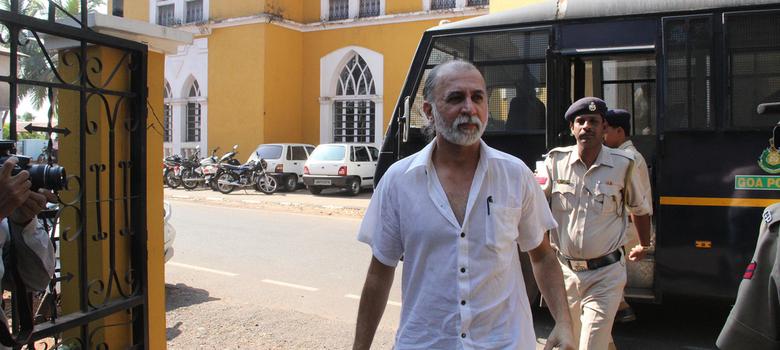
On August 6, the Bombay High Court overturned the ruling of a trial court in Goa acquitting the well-known journalist and founder-editor of Tehelka magazine, Tarun Tejpal, of sexually assaulting his colleague. Tejpal has now appealed to the Supreme Court. Here are links to three articles out of several published after the judgement (here, here, here).
The ruling set off once again the debate on the incident that occurred in November 2013 in Goa, where Tejpal was accused by a young reporter working for the magazine, of sexual assault. The Goa police registered a case against him. But typical of the glacial pace of the Indian judicial system, the trial began in 2017 and the judgement exonerating him was delivered in 2021.
But even before the judicial process had been set in motion, the media trial had begun. The accused was a well-known personality; the survivor was a young journalist at the start of her career. Even though she was entitled to her privacy and her name was not used publicly, in fact people knew. This is because her emails, phone chats, and videos were liberally shared with select members of the media and others who believed that Tejpal was being falsely accused because his journal had exposed many powerful people in the Bharatiya Janata Party.
Based on this material that was circulated, opinion pieces appeared in newspapers and on digital platforms that seemed to have already concluded that the survivor was guilty. One such piece appeared on this platform in 2014 (since taken down).
As a media commentator, I have been asked what I thought about the opinion piece that appeared in Newslaundry. In my view, on any objective journalistic criteria, it should not have been accepted. It was the kind of writing that appears on personal blogs, or on social media platforms like Facebook. But any digital platform, attempting to be credible and independent, ought not to have used it.
That article, and many others that appeared in the immediate aftermath of the case against Tejpal need to be seen in the context of how the media conducts its own trials even before the justice system gets going and the bias that is often evident in the coverage of rape cases when the individual accused is a prominent man, and in this case one of their own, a journalist.
There are many instances from the past where the media has covered in detail high profile rape cases while those cases involving poor women get barely any coverage. There is a considerable body of work documenting this inbuilt bias in the media on its coverage of crime in general, and sexual assault in particular, when the extent of coverage is determined by proximity and “the market” which is interested in news about “people like us”.
The insensitivity towards the survivor begins with her identity. According to the law, we are not permitted to name her. In 2012, in the coverage of the gang rape in Delhi that led to protests, and important changes in the rape law, media houses decided to make up names for the survivor. The one that stuck was Nirbhaya.
In less high-profile cases, such as the rape of a woman journalist in Mumbai just six months after the Delhi gang rape case, where a group of men accosted her and the photographer accompanying her in an abandoned textile mill estate and gang raped her, everything short of actually using her name was fair game for some newspapers. One sent a reporter to the building where she lived and asked the watchman whether the woman who had been raped lived there.
In another case, documented in the book “Missing half the story, Journalism as if gender matters” (Zubaan books), Sameera Khan – in the chapter “When survivors become victims” – writes about the 2009 case of an international student at the Tata Institute of Social Studies who was gang-raped by six men. The headline of the news item the day after the case was filed was: “Why was she with six men that night?” Typically, the story quoted parents saying how the men charged were “good” boys. Worse still, one newspaper ran sections of the FIR filed by the student giving intimate details of how the assault took place. All this before the charge sheet had been filed by the police.
In an age where information gets out before it is vetted and verified, the plight of women who pick up the courage to go to the police and report sexual assault is now even more fraught.
Let me end with this quote from Sameera Khan’s chapter by feminist Bishakha Datta, words that are worth heeding today:
“Rape is coerced sex; a crime. Only perpetrators can be held responsible for the crimes they commit – not victims. How is it that victims of any other crime are never blamed, but rape victims are always suspected of triggering rape? People who are robbed, murdered or otherwise assaulted are never held responsible…One can debate opinion; one cannot debate fact. Rape is, in fact a crime. Period. There are no two opinions around this.”